 Rakshit Narula
CPM, CPC, CTR, CPA and ROAS Explained: Formulas and Examples for Marketers
The five numbers every digital marketer should understand, with formulas, one worked example and how to read them together.
On this page
A campaign with a 5% CTR can still lose money. A campaign with a ₹40 CPC can be your most profitable one. Ad metrics only make sense when you know what each one measures and how they connect. Here are the five metrics every marketer should understand, with simple formulas and one example that ties them together.
Key points
- CPM and CTR tell you about attention. CPC tells you the cost of traffic.
- CPA and ROAS tell you whether ads make business sense.
- No metric works alone. Read them together, from impression to revenue.
- Know your break-even ROAS before you judge any campaign.
The five metrics at a glance
| Metric | Full form | Formula | What it tells you |
|---|---|---|---|
| CPM | Cost per mille (1,000 impressions) | Spend ÷ impressions × 1,000 | How expensive it is to be seen |
| CTR | Click-through rate | Clicks ÷ impressions × 100 | How interesting your ad is |
| CPC | Cost per click | Spend ÷ clicks | What each visit costs |
| CPA | Cost per acquisition | Spend ÷ conversions | What each customer or lead costs |
| ROAS | Return on ad spend | Revenue ÷ spend | How much revenue each rupee brings back |
One example, all five metrics
A Jaipur-based handmade jewellery brand runs an Instagram campaign for a week:
- Spend: ₹20,000
- Impressions: 2,00,000
- Clicks: 2,000
- Orders: 50, with an average order value of ₹1,600, so revenue is ₹80,000
| Metric | Calculation | Result |
|---|---|---|
| CPM | ₹20,000 ÷ 2,00,000 × 1,000 | ₹100 |
| CTR | 2,000 ÷ 2,00,000 × 100 | 1% |
| CPC | ₹20,000 ÷ 2,000 | ₹10 |
| CPA | ₹20,000 ÷ 50 | ₹400 |
| ROAS | ₹80,000 ÷ ₹20,000 | 4x (or 400%) |
CPM: the cost of being seen
CPM shows how much you pay for 1,000 impressions. It rises when competition is high (festive sales, IPL season) or when your audience is narrow. A lower CPM isn't always better: cheap impressions in the wrong place don't sell anything.
CTR: is your ad interesting?
CTR is the share of people who click after seeing your ad. Google defines it as clicks divided by impressions, so 5 clicks from 100 impressions is a 5% CTR. A good CTR depends on the platform and format, so compare against your own past campaigns.
CPC: the price of a visit
CPC is what each click costs. It's linked to the first two metrics: CPC = CPM ÷ (CTR × 10). In our example, ₹100 ÷ (1 × 10) = ₹10. So if your ad becomes more interesting (higher CTR), your CPC usually falls even if CPM stays the same.
CPA: the cost of a result
CPA is what you pay for each conversion: a sale, a lead, an install. It depends on traffic cost and on how well your website converts. If your website's conversion rate drops from 2.5% to 1.25%, your CPA doubles, even though the ads haven't changed.
ROAS: is it worth it?
ROAS compares revenue to ad spend. Google expresses it as a percentage: ₹5 in sales from ₹1 in ad spend is a 500% ROAS. But ROAS uses revenue, not profit, so a "good" ROAS depends on your margins.
Find your break-even ROAS
Use this simple formula: break-even ROAS = 1 ÷ gross margin.
- If you keep 50% of each sale after product and delivery costs, break-even ROAS is 1 ÷ 0.5 = 2x.
- If your margin is 25%, you need at least 4x just to break even.
Our jewellery brand has a 50% margin, so its 4x ROAS is comfortably profitable. The same 4x would only break even for a brand with 25% margins.
How to read them together
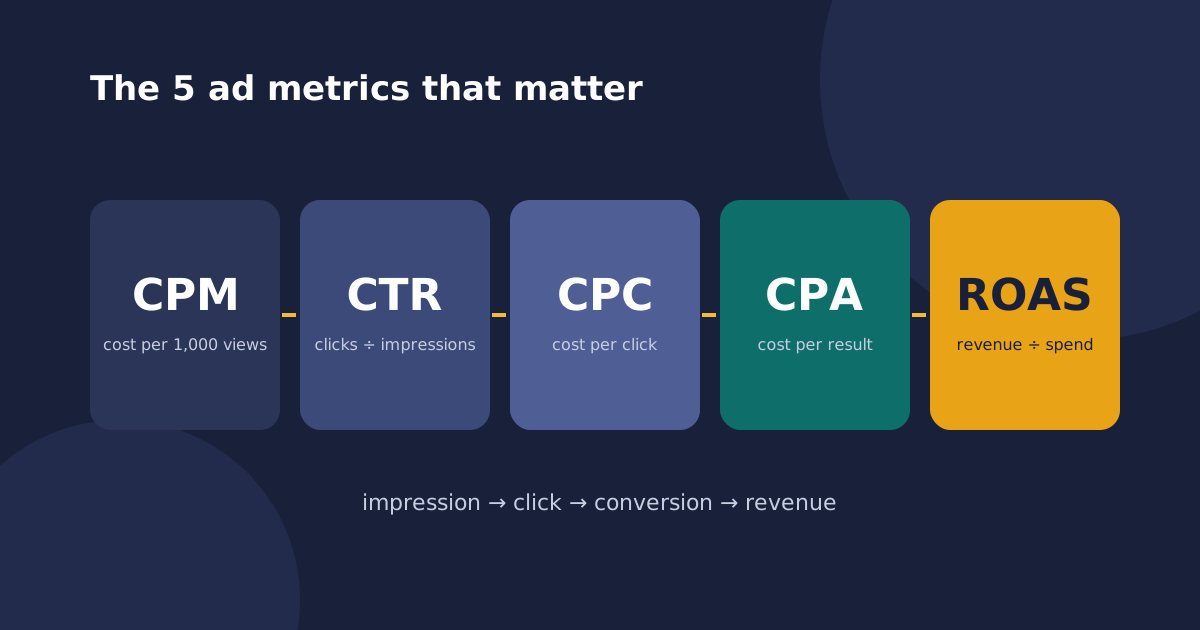
Think of the metrics as a chain: impression → click → conversion → revenue. When results drop, walk down the chain to find the weak link.
| What you see | Likely cause | What to try |
|---|---|---|
| High CPM | Narrow audience or peak season | Broaden targeting, plan ahead for sales |
| Low CTR | Weak creative or wrong audience | Test new hooks, visuals and offers |
| Good CTR, high CPA | Website or offer problem | Check page speed, price and checkout |
| Good CPA, low ROAS | Low order value | Bundles, upsells, free-shipping threshold |
Final thoughts
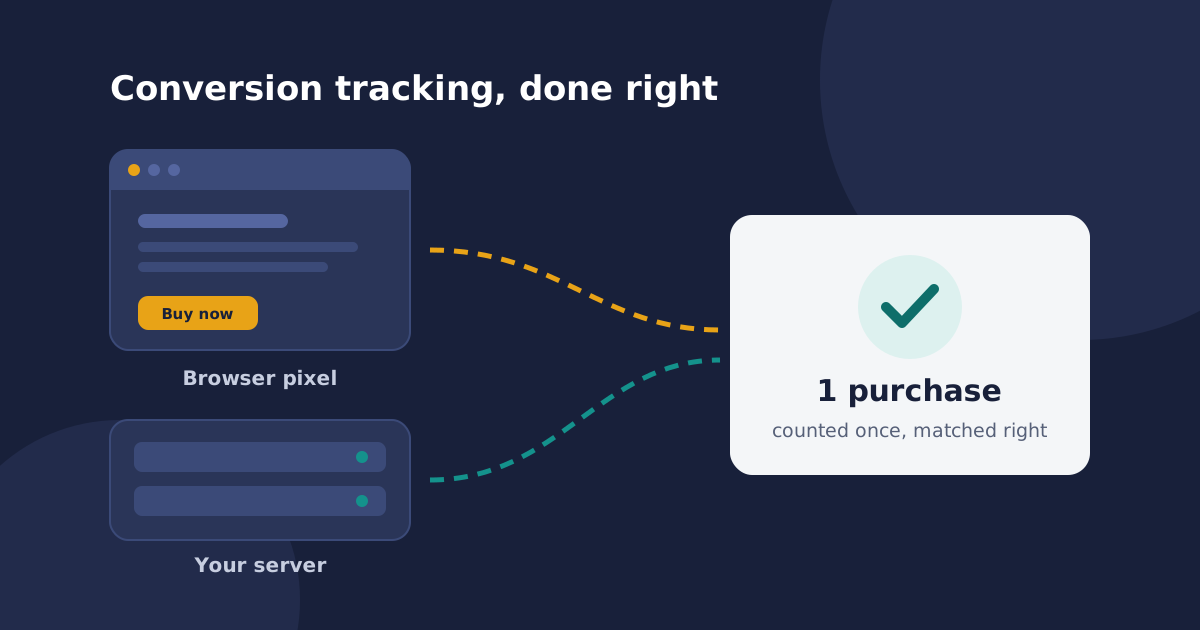
Don't chase one number. CTR and CPC help you improve ads. CPA and ROAS tell you if the business is healthy. And none of them matter if your tracking is wrong, so make sure your conversions are counted correctly first.
Not sure which number to focus on?
Share your campaign numbers with me on WhatsApp and I'll help you find the weak link. Or subscribe for the next guide.
Sources
Liked this guide?
Subscribe and get an email whenever a new article is published. No spam, just practical marketing knowledge.