 Rakshit Narula
AdTech Ecosystem Explained: How DSPs, SSPs and Ad Exchanges Work Together
A plain-language map of who buys, who sells and how programmatic ads are traded in milliseconds.
On this page
Every time a web page loads, an auction you never see may decide which ad you get. It happens in milliseconds, between companies most marketers have never heard of. If you buy programmatic or CTV ads, or plan to, understanding this chain helps you spend smarter and avoid paying for the wrong impressions. Here it is in plain language.
Key points
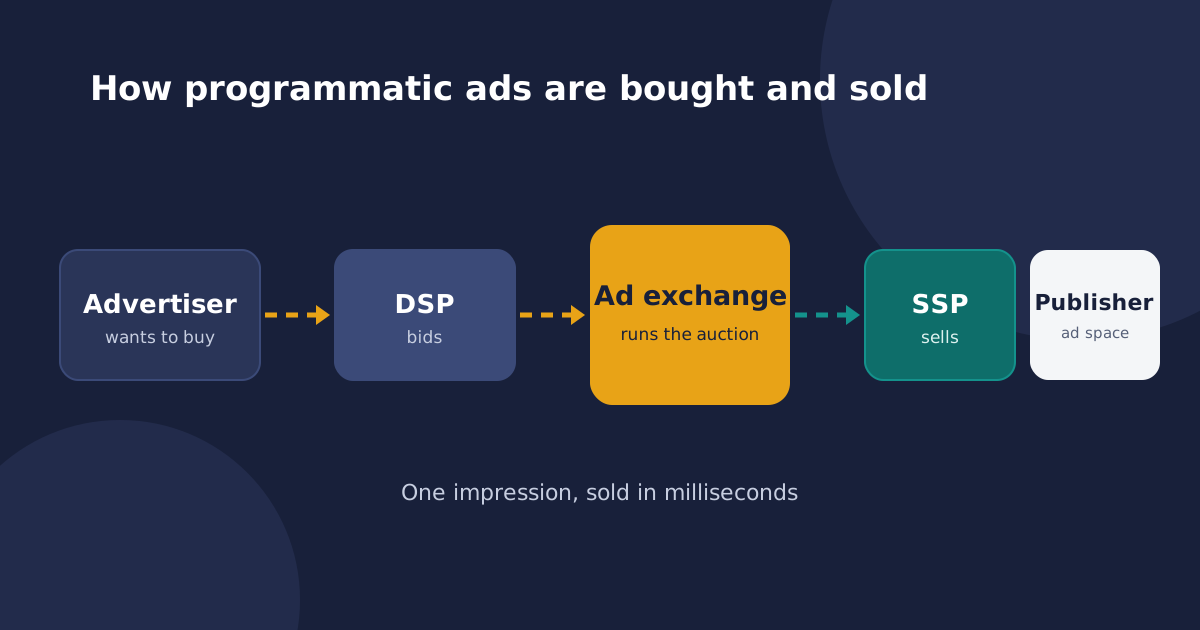
- Advertisers buy through a DSP. Publishers sell through an SSP. They meet at an ad exchange.
- Most of these deals run as real-time auctions, one impression at a time.
- Besides open auctions, you can buy through private deals for more control.
- Tools like ads.txt and sellers.json help you check who is really selling.
What is the AdTech ecosystem?
AdTech is the technology used to buy, sell, deliver and measure digital ads. On social platforms like Meta, one company does all of this inside its own app. On the open internet (news sites, apps, streaming TV), thousands of advertisers and publishers trade through a shared chain of tools. This is called programmatic advertising.
Think of it like a vegetable market. Farmers (publishers) have produce (ad space). Shop owners (advertisers) want to buy it. Agents on both sides (SSPs and DSPs) represent them, and the market yard (the ad exchange) is where prices are set.
The main players
| Player | Who uses it | What it does |
|---|---|---|
| DSP (demand-side platform) | Advertisers, agencies | Decides which impressions to bid on and how much to pay |
| SSP (supply-side platform) | Publishers, apps | Offers ad space to many buyers to get the best price |
| Ad exchange | Both sides | Runs the auction that connects bids with ad space |
| Ad server | Both sides | Stores and delivers the ad, and counts impressions |
| Data and verification tools | Mostly advertisers | Add audience data, check brand safety and viewability |
Google's Display & Video 360 (DV360) and The Trade Desk are well-known DSPs. Many SSPs also run their own exchange, so in practice the lines between SSP and exchange are often blurred.
How one ad impression is sold
Here's what happens when someone in Mumbai opens a cricket news app:
- The app has an ad slot. Its SSP sends out a bid request with details like the app name, ad size, device and rough location.
- The exchange shares the request with many DSPs at once.
- Each DSP decides in milliseconds whether this impression fits one of its campaigns, and how much it's worth.
- The highest valid bid wins. The winning ad is sent back and appears on the screen.
- Everyone records the result for billing and reporting.
This is called real-time bidding (RTB). Most of the industry follows a shared technical standard called OpenRTB, created by the IAB Tech Lab, so DSPs and SSPs from different companies can talk to each other.
Ways to buy: open auction vs private deals
Not every impression is sold in a free-for-all. Here are the main deal types, using the names Google Ad Manager uses:
| Deal type | Price | Guaranteed? | Best for |
|---|---|---|---|
| Open auction | Bid | No | Scale and testing |
| Private auction | Bid, with a floor price, invited buyers only | No | Premium sites with competition |
| Preferred deal | Fixed | No | First look at quality inventory |
| Programmatic guaranteed | Fixed | Yes, agreed volume | Big launches and sponsorships |
Private auctions and preferred deals together are often called a private marketplace (PMP).
Example: an OTT brand launch
Let's say an OTT app in India is launching a new series. For launch week, it books programmatic guaranteed deals on two big entertainment sites to make sure the trailer is seen. In parallel, it runs a smaller open auction campaign across thousands of apps to find which audiences install the app at the lowest cost. After the launch, it moves budget to the best-performing sites through preferred deals.
Where CTV fits in
Connected TV (CTV) ads on smart TVs and streaming apps are increasingly bought through the same chain. A DSP can bid on an ad slot in a streaming app much like it does on a website. Prices are usually higher and inventory more limited, so private deals are common.
Keep your spend clean
Long supply chains create room for waste and fraud, such as fake sites pretending to be premium publishers. The IAB Tech Lab created three tools to help:
- ads.txt / app-ads.txt: a public file where publishers list which companies are allowed to sell their ad space.
- sellers.json: a file where SSPs and exchanges list the sellers they work with.
- SupplyChain object: shows every company that handled a bid request.
Final thoughts
You don't need to be an engineer to buy programmatic ads well. Know who's who in the chain, choose the right deal type for your goal, and insist on transparency. That alone puts you ahead of most advertisers.
Thinking about programmatic or CTV?
Send me a message if you're unsure where to start or which deal type fits your budget. Or subscribe for the next guide.
Sources
Liked this guide?
Subscribe and get an email whenever a new article is published. No spam, just practical marketing knowledge.