 Rakshit Narula
AI in Digital Advertising: How AI Is Changing Media Buying, Targeting and Optimisation
What AI now does inside ad platforms, what it still can't do and how to work with it to get more from your budget.
On this page
Five years ago, a media buyer spent most of the day adjusting bids, audiences and budgets by hand. Today, AI does much of that in the background. But AI doesn't replace good marketing. It amplifies whatever you feed it, good or bad. Here's how AI is changing media buying, targeting and optimisation, and what's still your job.
Key points
- AI now handles bidding, audience finding, budget allocation and even ad variations.
- Google's Performance Max and Meta's Advantage+ are the best-known examples.
- AI learns from your conversion data, so clean tracking matters more than ever.
- Your job shifts from pressing buttons to setting goals, feeding inputs and checking results.
What AI actually does in advertising
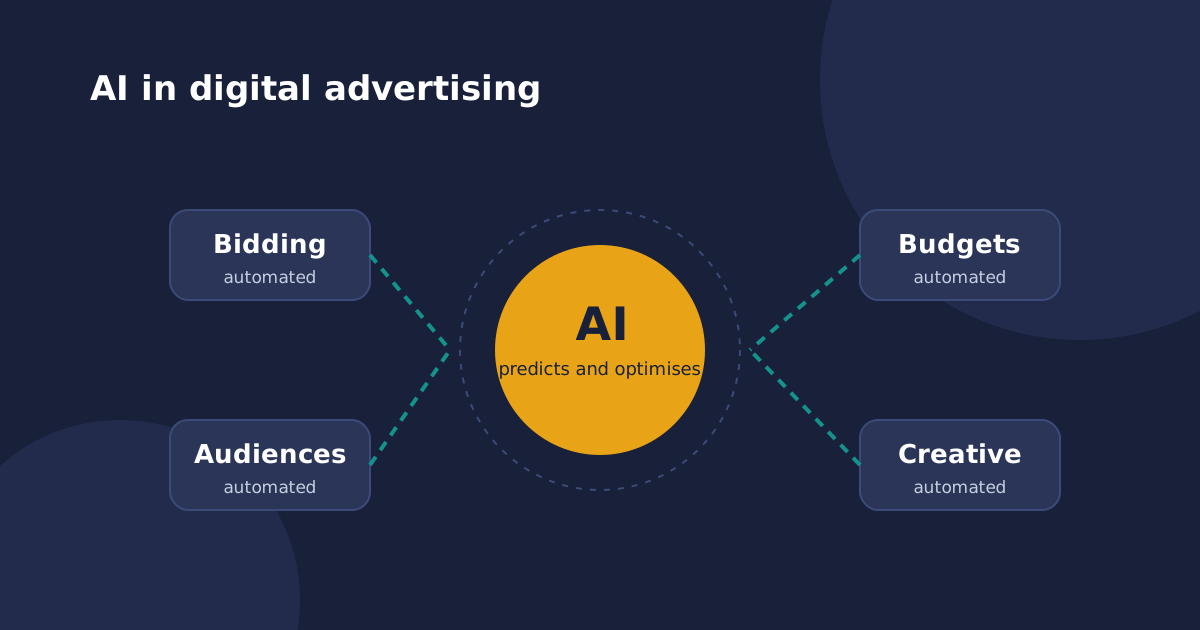
Ad platforms use machine learning to predict, for every single impression, how likely a person is to click, buy or sign up, and how much that's worth to you. They then act on those predictions billions of times a day. In practice, AI now helps in four areas:
| Area | Before | With AI |
|---|---|---|
| Bidding | Manual bids per keyword or ad set | Automated bids for each auction, aimed at your CPA or ROAS goal |
| Targeting | Hand-picked interests and age groups | Broad audiences, with AI finding likely buyers |
| Budgets | Moved weekly between campaigns | Shifted automatically to what's working |
| Creative | A few fixed ads | Many combinations of text, images and video, mixed and tested automatically |
AI-driven campaign types you should know
Google Performance Max
Performance Max is a goal-based campaign type that gives you access to all Google Ads inventory (YouTube, Display, Search, Discover, Gmail and Maps) from a single campaign. Google says it uses AI across bidding, budget optimisation, audiences, creatives and attribution. You provide the goal, budget, creative assets and optional audience signals (hints about who your customers are), and the system does the rest.
Meta Advantage+
Meta's Advantage+ is a set of AI tools across Facebook and Instagram. Some automate one part of a campaign, such as audience, placements or creative. Others, like Advantage+ sales campaigns, automate most of a campaign at once.
Smart bidding everywhere
Bid strategies like target CPA, target ROAS and maximise conversions now exist on almost every major platform. When you create or change one, Google shows a "Learning" status while the system calibrates to your new goal.
Example: a coaching institute switches to AI bidding
Here's an example. A coaching institute in Pune runs Google Search ads with manual bids. The team spends hours each week adjusting 300 keywords, and cost per lead sits around ₹450.
They fix their lead tracking first, then switch to target CPA bidding with a ₹400 goal and add a Performance Max campaign with their best videos and student testimonials. They leave both alone through the learning period. Over the next two months, cost per lead settles near ₹380, and the team now spends its time on better ads and faster lead follow-up instead of bid changes. These numbers are an illustration, but the pattern is common.
What AI still can't do for you
- Choose the right goal. If you optimise for cheap leads, AI will find cheap leads, even if they never buy. Optimise for the result that actually matters to your business.
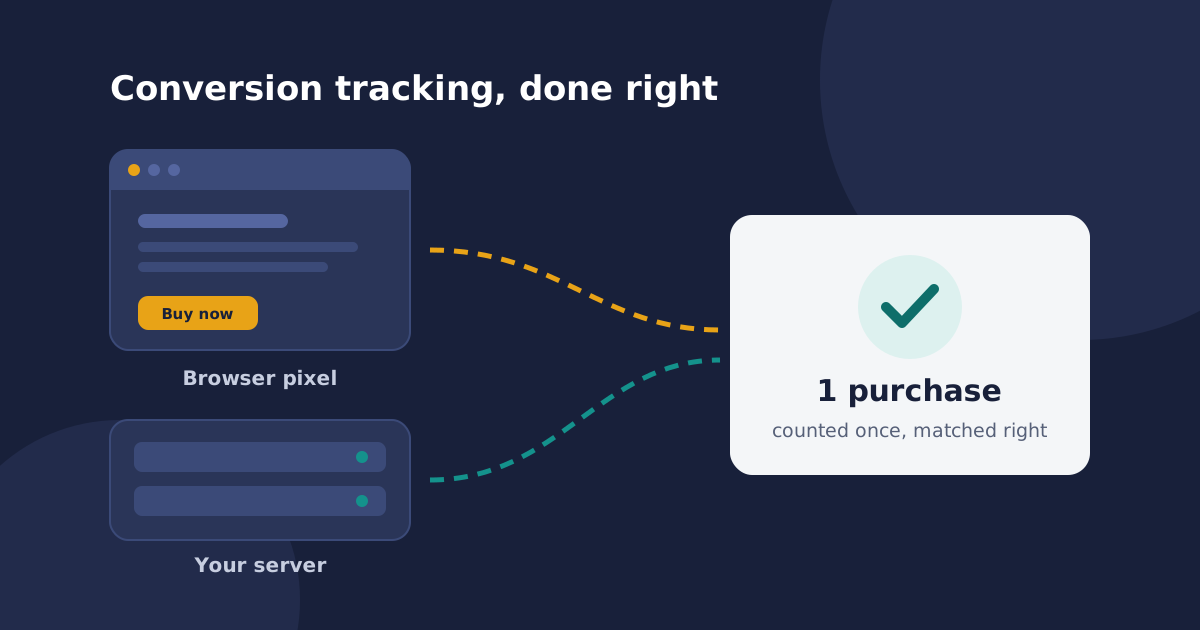
- Fix bad data. AI learns from your conversion tracking. Missing or doubled conversions teach it the wrong lessons.
- Create a strong offer. AI can mix your assets, but it can't make a weak product or price attractive.
- Understand your brand. Auto-generated text and visuals still need a human check for tone, accuracy and compliance.
- Judge long-term value. Platforms optimise inside their own walls. You still need to compare channels and look at profit, not just platform-reported results.
How to work well with AI campaigns
- Get tracking right first. Send accurate conversions and, where possible, their value.
- Give it enough data. Fewer, bigger campaigns usually learn faster than many tiny ones.
- Feed good inputs. Strong images, videos, headlines and audience signals improve results.
- Be patient. Avoid big changes during learning. Google recommends running Performance Max campaigns for at least six weeks before judging them.
- Keep testing. Run controlled tests between AI and manual setups to see what really adds value for your business.
Using AI for your own work
Beyond ad platforms, AI assistants can speed up a marketer's daily work: drafting ad copy variations, summarising reports, building presentation outlines and researching competitors. Use them as a fast first draft, then apply your own judgement before anything goes live.
Final thoughts
AI is now the engine of digital advertising, but you're still the driver. Set the right destination, keep the fuel clean (your data and creative) and check the route regularly. Marketers who learn to guide AI well will get far more from the same budget.
Wondering if AI campaigns suit your business?
Send me a message with what you're running today and I'll share where automation could help. Or subscribe for the next guide.
Sources
Liked this guide?
Subscribe and get an email whenever a new article is published. No spam, just practical marketing knowledge.